Narrative is hard. Being in post production myself, I avoid the stress of creating a succession of events that gets the audience emotionally invested. But the recognition and results of a good narrative is rewarding for creator and consumer alike. The Last of Us excels at this. In this journal, I’m going to dive into how The Last of Us tells a powerful narrative through world building and character empathy.
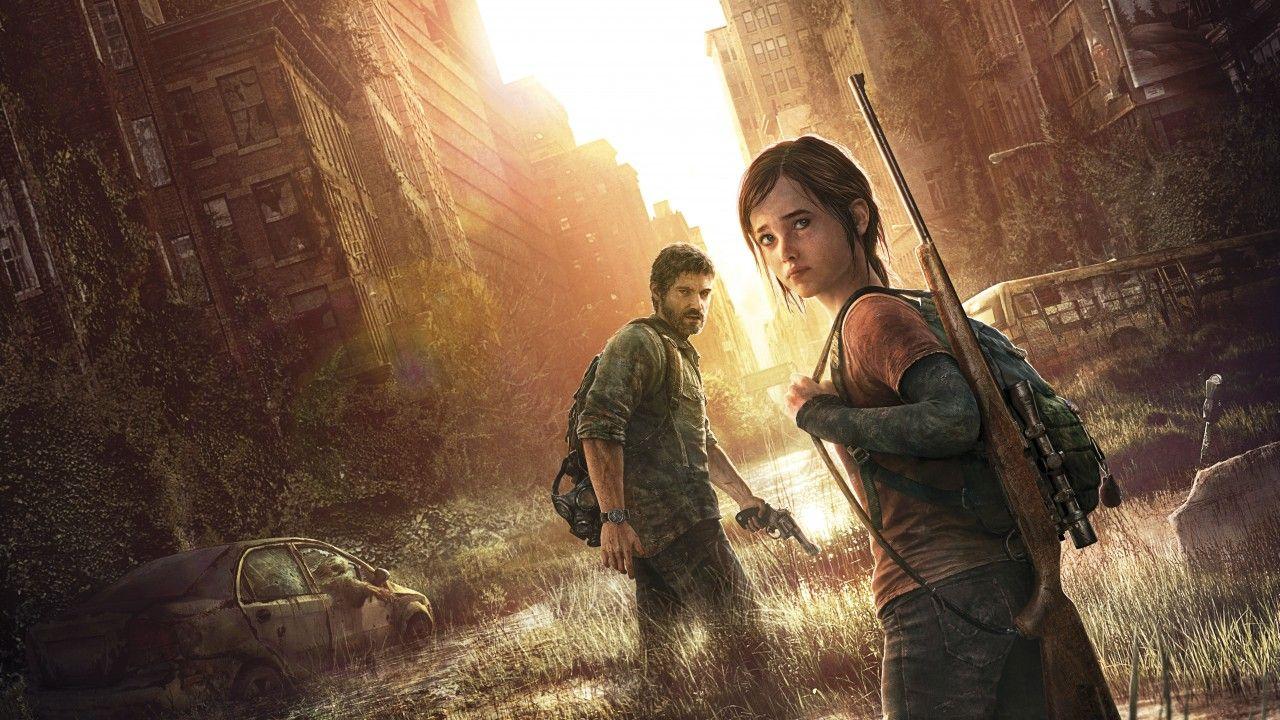
Show don’t tell. That’s rule #1 of good narrative. For video games, the easiest way to show the most in the shortest amount of time is in the game space. In Simon Egenfeldt-Nielsen’s chapter, “Narrative,” he says, “The most important component of a game world is the game space” (175). The Last of Us entertainingly delivers exposition through the world around you. From the start, you’re imbued with the mass panic of the outbreak. You watch the events unfold from a distant explosion to Joel’s fear and then on the streets. Everyone is screaming, sirens ringing, and fires raging. The game sets the tone for what’s to come.

Jump to present day. One of the first things you see is the execution of two civilians. Even worse, it’s done in the middle of the street and treated as the norm. This combined with the the PA system, military, and graffiti are the “fictional clues” Egenfeldt-Nielsen mentions: “These fictional clues certainly stimulate the player’s imagination to turn the playing experience into a kind of narrative-related experience” (173 Egenfeldt-Nielsen). The game is filled with these to engage the player’s imagination and further invest them.
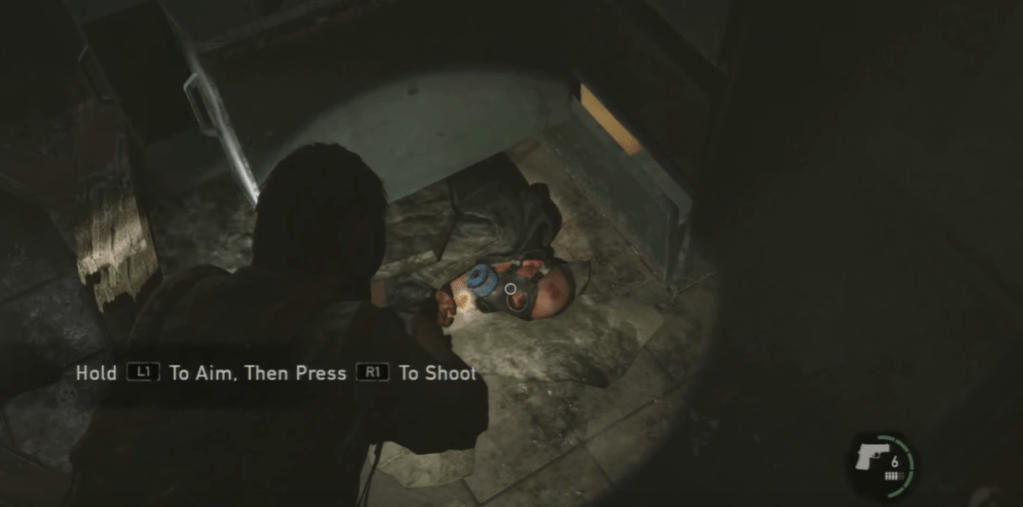
For The Last of Us, since the characters you play as are set (130-131 Shaw), I want to talk about identifying with them. In Adrienne Shaw’s chapter on connecting with characters, she describes this as “identifying with the char.’s situation, experiences, and personality regardless of … shared identifiers” (112 Shaw). The Last of Us tells its stories so well that all you can feel is empathy for their characters. Joel struggles with his daughter’s death, and Ellie with her loneliness. The game tells its story through cutscenes and gameplay alike. After Ellie’s kidnapping, you notice her NPC being less responsive and optimistic. One of my favorite parts of the game is when they teach the shooting mechanic: mercy killing.
The Last of Us delivers a Master Class on video game storytelling. It’s evident in its immersive, grim world and continues through the characters’ experiences and relationships. It’s that attention to detail that makes the game so good.
Works Cited
Egenfeldt-Nielsen, Simon. “8: Narrative.” Understanding Video Games: The Essential Introduction. Routledge, 2013.
Druckman, Neil. The Last of Us. Naughty Dog. 2013.
Shaw, Adrienne. “3: He Could Be a Bunny Rabbit for All I Care!: How We Connect with Characters and Avatars.” Gaming at the Edge: Sexuality and Gender at the Margins of Gamer Culture. University of Minnesota Press, 2015.
 AJ Sison's Blog for Video Game Culture